American-Irish designer, Paul Costelloe is in my own humble opinion – severely underrated. Not only does the name encompass a family-run design business, with collections that include womenswear, menswear, bags and accessories, homeware, jewellery, eyewear and children’s occasionwear, Costelloe is also a bright leader in the use of hand-crafted, luxurious fabrics combined with cutting edge design, innovation and creativity.
What I like most about his shows is the sense of occasion; from the usually gilded venue to the individual looks of every model – Costelloe turns his ideals for next season into a beautiful spectacle, and the Autumn/Winter ’17 collection did not disappoint. Set in the ballroom of the Waldorf Hilton, models flounced around in Irish tweeds, fine wools and silk jacquards. Sleeves are exaggerated with a nod to the Tudor period, while femininity is celebrated through corseted waists and full skirts.
Plunging necklines and bold slit skirts added a modern update to the otherwise prudish look, and traditional fabrics collaborated nicely with latex and leather. Sheer fabrics, cut-outs and a metallic colour palette also added an element of fun. “Creativity, texture and traditional designs are what I want my brand to always be,” Costelloe says.
Take a look at backstage shots by Alexander Chai below…
In these turbulent times, there is sometimes a need for escapism. Personally, for me, this takes shape in layers of tulle, glittering embroidery and a world so heavily cloaked in artisanal flair that only a real-life princess could accrue such a wardrobe. Such is the world of Haute Couture.
Unlike other Fashion Weeks held six months before the product they show is available online or in-store, Haute Couture is the only showcase in which clothes are created for the season in which they are shown. Yet, the production of each garment can easily cost five figures, and it’s a well-known fact that couture is a loss-leader – the couture industry is simply not profitable.
So why do we still look to these collections as the ultimate pinnacle of fashion?
“Haute Couture is what gives our business its essential essence of luxury,” Bernard Arnault, the CEO of LVMH told The Telegraph. “Set against the money we lose has to be the value of the image couture gives us. Look at the attention the collections attract. It is where you get noticed. You have to be there. It’s where we set our ideas in motion.”
Haute Couture was coined in the mid-19th century when Charles Frederick Worth, an English fashion designer living and working in Paris, started creating custom gowns for elite customers such as royalty and celebrities. A French governing body, the Chambre Syndicale de la Haute Couture, founded in 1868, has since stipulated the parameters of couture fashion as a “protected name” which can only be used officially when the designer meets certain standards. Each couturier is annually examined to satisfy strict criteria such as having an atelier in Paris with at least 15 full-time staff members and 20 specialised craftsmen, as well as publicly presenting a minimum 75-piece collection of original day and eveningwear, at the Couture Fashion Week, every January and July.
Over the past 15 years, Lebanese designers, such as Elie Saab and Zuhair Murad, and Algerian designer Yacine Aouadi, have also been invited by the Chambre Syndicale de la Haute Couture to participate in Couture Fashion Week, which has introduced a new Arab customer base.
Chanel Haute Couture SS17 in Paris
Editor-in-chief of Harper’s Bazaar UK Justine Picardie explained to CNN Style: “There are some very, very, very rich people who want to buy and wear the most beautiful, handcrafted, individual clothes in the world… We’re seeing these great waves of new wealth, from China, from the Middle East, Russia, and also the emerging markets in Africa and India. What’s interesting is that they are buying these clothes in such quantities that a brand like Valentino, which is owned by the Qataris, has doubled its number of couture ateliers.”
Right now, couture is responding to the rising demand from Asia, Russia and the Middle East, while 60% is still American. In the past few years, 6 new designers have been granted couturier status, while Dior, Chanel, and Armani quite often organise private appointments in Shanghai, Dubai and Hong Kong.
January’s Spring/Summer ’17 couture shows featured the likes of Schiaperelli touching on surrealist legacies while John Galliano worked his couture magic for Maison Martin Margiela with beautiful faces in tulle. Thus summoning proof that couture houses are more than able to adapt to the changing environment. Couture is and always will be viewed as head innovators of the fashion industry, through the artisanal craftsmanship from which fashion has transcended from; ornamental yet difficult fabrics and the constant experimentation in techniques, cuts and patterns. Such rare talents in modern times, Chanel has recently committed to protect and promote haute craftsmanship acquiring and supporting 10 Ateliers D’Art specialising in rare techniques through a subsidiary company.
Through this, Haute Couture maintains its crowning relevancy over a sea of fast-fashion and ready-to-wear.
This season’s couture shows displayed an ode to nostalgia but ultimately, a need to move forward, and none so effective than through loud feminine wiles.
Chanel Chanel has traditionally held a spectacle for their shows to compliment the theme, spectacles and sets such as a casino with the Chanel muses playing cards, an airport complete with check-in counters and departure boards, or a supermarket fully stocked with inter-twining C branded products. This season, however, it was back to basics – well, as basic as couture can get, with a hall-of-mirrors room, inspired by the 20s style of the famed spiral staircase in the house’s Rue Cambon HQ. The work of British interior designer Syrie Maugham was cited as a reference by Lagerfeld – a woman who famously told a client: “If you don’t have ten thousand dollars to spend, I don’t want to waste my time.” Similarly, the collection was just as decadent; silver sequin shifts with bursts of marabou shimmered to life under the lights, while a flapper dress was beaded with rows of crystals and decorated with tiers of feathers. While other looks – such as tweed skirt suits, pearls and dignified dresses – channeling First Ladies rather than flappers.
Dior 70 years in the making and Dior finally has a woman as its creative director. Maria Grazia Chiuri’s first couture collection had only two months to materialize; she does not speak French, while most of the Dior atelier does not speak Italian. “We had to find our own, new language,” she says.
Fitted Dior Bar jackets graced the runway with chiffon and lace ball dresses – a functional femininity if you will. Embroidered inspiration took form from the artist Claude Lalanne’s delicate sculptures and Christian Dior’s beloved horoscope symbols scattered across 50’s satin full skirts. This follows on from her first ready-to-wear collection with feminist slogans across t-shirts paired with tulle skirts; and although Maria says, “pret-a-porter reflects the moment, couture is about timelessness,” a case could be made for functional tailoring as a feminist statement in itself.
Elie Saab Elie Saab pays homage to the goddesses of Egypt this season, inspired by an Arab epoch ‘that left us with a priceless cultural heritage – a source of light & richness for civilizations.’ The collection is wonderfully princess-like, as is what Mr Saab is known for, albeit this season takes a more grown-up approach with hints of boudoir dressage through sheer silks and ostrich feathers. Embroidery took form in the shape of boats dancing in the Nile’s blue hues and the eye of Horus while the finale dresses spoke of freedom through female empowerment.
Schiaparelli Haute Couture Legend has it; Elsa Schiaparelli’s astronomer uncle once pointed out the many moles on her face which bore the same resemblance as the Great Bear constellation – thus Schiaparelli had her good friend, Salvador Dali, make this into a brooch for her to wear proudly. This same constellation is featured in Bertrand Guyon’s latest couture collection, the artistic director for the house drew the design on a white cashmere cape, along with the sun and the moon and draped it over a little white tunic dress, with thigh-high boots in the same red.
This symbolic legacy seemed a long-time coming; after four seasons at Schiaparelli, Bertrand felt ready to take on the house icons – the lobster, the Cocteau faces but through a much more provocative way, through arduous embellishments and fine embroidery. Something you can’t help but think Schiaparelli would have been most pleased with.
In today’s internet-age, luxury brand’s most effective way to target millennials is through the certified use of ‘influencers’; these are young, like-minded individuals who have reached levels of fame through the use of social media. Gone are the days of becoming rich or famous through reality TV and leaked porn tapes – today’s influencers thankfully have some integrity. They are the social media stars, the taste-makers, the judge and the jury of what is hot right now.
Brands now recognize the arrival of the “era of millennials,” who not only are about to become the largest spending generation in history but also confidently re-define the vision of luxury. With 47% of this group making their purchase decisions under the influence of social media, luxury brands have had no other choice but to rise to the challenge.
Research from Digital Luxury Group shows 40% of Google results for branded and technical watch brand terms are from blogs and forums. Chiara Ferragani from The Blonde Salad, Kristina Bazan of Kayture, Aimee Song from Song of Style, Leandra Medine of The Man Repeller, and many more have already collaborated with luxury brands in impactful ways.
After ignoring digital for years, Rolex first graced Instagram at the end of 2015 by tapping into the pool of connections of its celebrity portfolio (Roger Federer alone boasting 2.3 million followers) and promptly overtook the competition in just weeks after the first post.
Tiffany & Co. also generated great organic reach via its aspirational demographics by featuring a constellation of celebrity faces in #LegendaryStyle and #LoveNotLike campaigns.
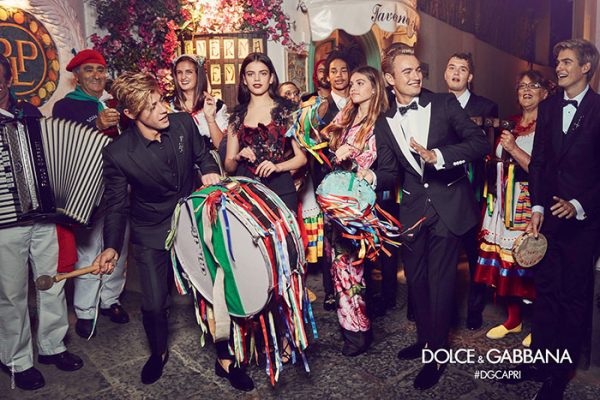
While hot off the press this week is Dolce & Gabbana’s Spring/Summer 2017 campaign which stars a cast of fresh-faced millennial influencers; featuring Cameron Dallas – a Vine star, Presley Gerber – son of supermodel Cindy Crawford, Gabriel Kane Day-Lewis – son of Daniel Day Lewis, Luka Sabbat – style influencer, Brandon Thomas Lee – son of Pamela Anderson & Tommy Lee, Rafferty Law – son of Sadie Frost & Jude Law, Zendaya Coleman actress & singer, Sonia Ben Ammar – model girlfriend of Brooklyn Beckham, and Thylane Blondeau model, who all together, accumulate more than 50 million social media followers.
Online sales are set to triple in the next decade (McKinsey & Co). By 2025, the online share of total luxury sales is predicted to be 18%, and a whopping £70 billion annually. As a result, luxury e-tailers are still finding their feet when it comes to meeting high consumer demand, especially during the busy festive season.
Announced on Monday, Matchesfashion.com has introduced a new delivery service that allows customers across London to receive their purchase only 90-minutes after they have placed an order. Chief executive Ulric Jerome told the Evening Standard: “This new service means a City worker who has just pulled an all-nighter can order a fresh set of clothes for that important first meeting of the day, or a last-minute invitation in the evening with nothing to wear won’t be a problem anymore.” The service is already available on the site with a £12 charge, adding one more option to the retailer’s available delivery services that also include Next Day and Express delivery. Customers who wish to purchase using 90-minute delivery have to place their orders from 6.30am to 10pm.
The service is already available on the site with a £12 charge, adding one more option to the retailer’s available delivery services that also include Next Day and Express delivery. Customers who wish to purchase using 90-minute delivery have to place their orders from 6.30am to 10pm.
In collaboration with leading same day courier CitySprint, the couriers will pick up the products from Matchesfashion.com’s Wembley distribution centre and deliver them to customers.
Major mass-market names, including Amazon and Walmart, have been investing heavily in research into done-based delivery but it is unclear how such a service would sit with a luxury offer and how amenable public opinion would be to the prospect of a massive number of drones occupying urban airspace.
Meanwhile Net-a- Porter currently runs their own branded fleet of vans and offers same-day shipping in three cities, Everlane ups the ante with one-hour shipping.
ContactLab CEO Massimo Fubini said: “There is definitely work to be done in the luxury sector. Consumers pay a lot of money for products from these luxury brands and they expect the whole experience to have that luxury feeling, from the moment they order the item to the moment it arrives at their door. Brands must go that bit further at every single stage of the consumer journey, but very few are fulfilling their full potential.
“Many brands are missing the little touches which make all the difference, such as covering the product in standard parcel paper rather than delivering it in a more luxurious manner. Some brands, such as Fendi, Cartier, Tod’s and Net-a-Porter do show best practice when it comes to packaging and focus on maintaining that feeling of luxury throughout the whole consumer journey.”
Trending from the autumn/winter ’16 catwalks to appearances in must-see shows such as ‘The Crown’, take in this season’s most sumptuous and regal fabric of choice through our top picks below…
Aquazurra Velvet Boots
Following in the footsteps of Taylor Swift, Rihanna and Kendall Jenner, Sybarites should try on these thigh-high velvet beauties for size. Straight off the Aquazurra Autumn/Winter ’16 catwalk, the crimson design is crafted entirely from soft stretch-velvet for a truly luxe look. Use them to add a sharp burst of colour to a chic monochrome look.
Ralph Lauren Ruffled Dress
Add some drama this party season with this mini dress from Ralph Lauren, featuring a black velvet body with asymmetric ruffled sleeves. Pair with minimal stilettos and elegant poise.
Alberta Ferretti Robe Jacket
Crafted from the softest velvet, this terracotta pink Alberta Ferretti velvet robe jacket will instantly make you feel like royalty. Detailings include with long sleeves, two front external pockets, yellow contrasting piping and classic lapels.
Dolce & Gabbana Vanity Bag
This gorgeous bag takes its design cues from the glamorous styles of days gone by. The structured shape is covered in sumptuous velvet, and decorated with gleaming gold-tone hardware. Carry it against sleek monochrome looks come evening.
Alexander McQueen Velvet Slippers
For the every-day, you can rely on Alexander McQueen. These velvet slippers are embellished with crystal star, moon and butterfly motifs, inspired by the AW ’16 collection’s ‘Obsession’ theme – the idea of collecting trinkets and charms in a dreamlike state. Masterfully made in Italy, this pair is pristinely finished with grosgrain piping and a quilted satin insole.
From the unsure shores of post-brexit Britain to the ruffled feathers (and tulle) of a heated political debate across the pond, next season’s collections offered a provocative reply to what is going on in today’s cultural climate.
Bra-vo
Riding on the hemtails of underwear as outerwear, the bra takes centre stage in this seasons provocative collections; Miucca Prada took on a fun and plenty of frills take with her beachy collection at Miu Miu, in the form of ruched Fifties bikini tops worn over utilitarian dresses. Alexander Wang flirted with wraparound bralettes while Victoria Beckham’s crushed satin mini bustiers looked chic paired with a matching suit trouser.
Think Pink
But not as you know it. This seasons rosey-hue takes on a brighter, fuchsia tone; an in-your-face, almost punk saccharine if you will. “Colour is always important for me – used almost like a pigment,” says the Hermes designer,Nadège Vanhee-Cybulski. “I would love to think about the purest form of colours. You really think about which fabric or material you are going to use, sometimes it’s very instinctive.” An exciting move forward from Hermes with their new out and loud attitude to the pink shade. Meanwhile Valentino’s fuchsia cape/dress hybrid won the audience over and Balenciaga took to using spandex in bold colours.
Ballerina-esque
Tulle ruled the catwalks for this season, from Dior’s feminist yet feminine show, a debut from Maria Grazia Chiuri; long tulle skirts were paired with statement tee’s, proving that once more, girls rule the world. Molly Goddard’s love for tulle knows no bounds, and for spring/summer she made it fit for raving in, creating a swathe of neon tulle in crinoline skirts paired with graphic tees, whilst Alessandro Dell’Aqcua ran with it assiduously at Rochas, too. Veiled over Devoré velvet patterned dresses in a dual-colour layered effect, the result was a pretty one.
Ruffles
Here, there, everywhere. Holding onto the very romanticised looks of the season, ruffles were seen all over the major cities; in London, Sarah Burton sent down black leather ruffles for Alexander McQueen, embroidered and printed. In Paris, Jacquemes placed ruffles in southern France, where Victoriana undertones matched the white ruffle overdose, and in New York, both Dries Van Noten and Philip Lim 3.1 were floral, flowing and flirtatious.
The logo to be spotted with this season is no logo at all.
Forget labels. The fashion mantra for autumn/winter 2016 seems to be if you’ve got it – don’t flaunt it.
For while designer logos were popular in the eighties, nineties and noughties – when celebs and civilians alike used them as a way of showing off their status and wealth – fast forward to today and every self-respecting Sybarite knows that true luxury doesn’t need to shout about its status.
We’re still purchasing luxury brands – take a bow Louis Vuitton, Bottega Veneta, Burberry, Hermes et al – but whereas once we would have splashed the cash on monogrammed belts and bags, now we’re purchasing clothes and accessories by the aforementioned labels, sans logos.
So why are are we all showing off by, erm, not showing off? The answer, I think, is two-fold.
Our desire for discreet branding is one way to distance ourselves from tacky reality TV stars, with whom we don’t want to be aligned – say hello to Paris Hilton and Kim Kardashian, both of whom shot to fame (and fortune) on the back of leaked ‘home’ video tapes and thus have the cash, if not the class, to kit themselves out in high end labels. Ditto WAGs and Russian oligarchs…
It’s also because in this uncertain post-Brexit era where consumers are already being hit in the pocket, with prices for everything from craft beer to cars rising, understated luxury – or stealth wealth to give it, its new name – is a much more appropriate option than screaming logos and obvious branding.
The plane truth of the matter is that, in these tough, turbulent times, ostentation is it out – it’s just not good taste given the world refugee crisis – and conspicuous consumption is in. Plus as Tomas Maier – creative director at Bottega Veneta – puts it: “People should always be in charge of their clothes. It shouldn’t be the clothes that are in charge of you.”
Maier’s Bottega Veneta, together with The Row and Céline are the brands we are coveting – specialising as they do in subtle labelling that makes it harder to gauge how much a garment really cost.
Or, as the hotelier Gordon Campbell Gray, once famously remarked: “The reality is, if you have wealth, you don’t need glitz. You want understatement. It’s got to be low key and it’s got to be lovely.”
Haute couture week never ceases to amaze and this season was no different. Embodying a nostalgic and romantic melody, Autumn/Winter ’16 looked back to days of old, where fast fashion hadn’t yet come to fruition, where the women of the ateliers were acknowledged for all their efforts and time-consuming labours and city-dwelling lovers weren’t driven by the likes of on-screen dating apps.
Showcasing the finest jewellery from Bentley & Skinner, Chopard, Chaumet, De Grisogono & David Morris, we bring you ‘Diamonds & Pearls’; every sybarites dream. Shot at location at the opulent Cafe Royal, London.
Feminist dress history Fashion image-making and visual culture Material culture and adornment The commodification of activism Corsetry and the politics of the body Contemporary luxury fashion narratives Digital feminism and protest dress Fashion as cultural text and identity construction




 Sufiyeh