First of all, how does it feel to be a black queer icon?
Well, it’s actually really scary. I don’t see myself as a black icon. It’s funny ‘cause obviously in the show, I mentioned that I never really had anyone to look up to, except Naomi Campbell and my mum. So now that I am a black icon for thousands and thousands of black queer gay kids, it’s a bit weird. It’s a lot of pressure, but it’s also an honour and a blessing. It’s something that I will hold truly, and will always try to do my best, and to give the best advice and just make someone feel accepted. If I can help one person, I’ve done my job.

How would you describe your style?
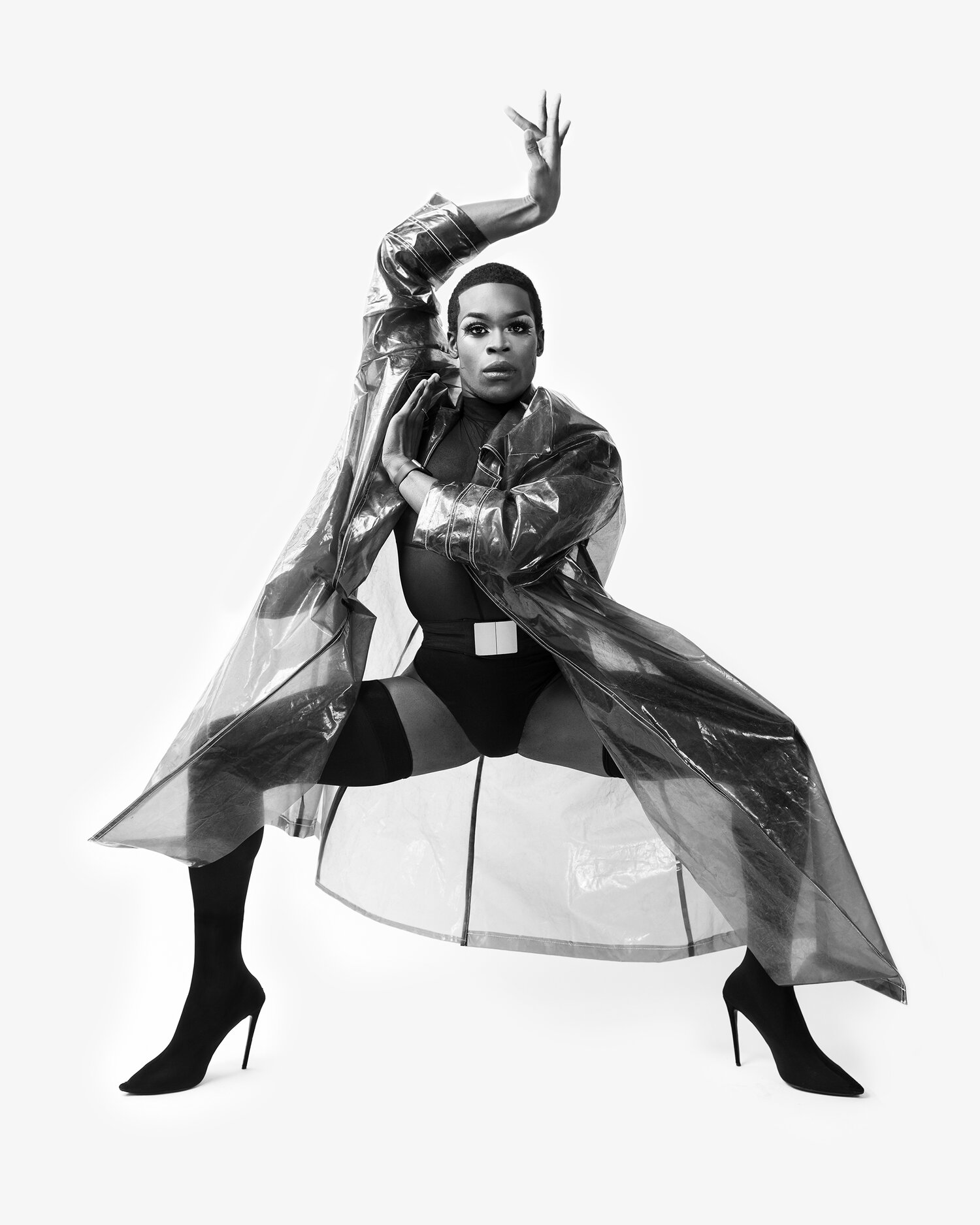
If Melanie C, Naomi Campbell and a senior bank teller had a baby, that would be me. Yeah, it’s weird it’s expressing in a million ways; there’s not one thing, we are all a million things. So, some days I feel really queer, some days I want to wear all black, sometimes I just feel super fabulous and sometimes I just want to wear a suit and a hat. It always changes, everything depends on the mood, the feeling, the day. All these different things, but that’s what allows you to become a fabulous queer icon.
What first interested you in drag and do you have like a drag journey to tell us?
Oh, so in the beginning I hated drag. I hated it, I thought it was like a cop out. I used to think it was like ‘oh, I’ve failed as a performer’ so I’m gonna put on makeup and change who I am. It wasn’t until I found Sink The Pink and Raven Mandella, my drag mother, that I was like, ‘Oh, this isn’t like a cop out it’s a whole world and a lifestyle.’ Because I came from a dance background; working from 8 in the morning at the bar all day till 6pm – it’s not exactly a straight world, but it’s so different to the gay, queer world. So, when I found drag I was like, ‘Oh my god, they’re just living their lives and being all colourful.’ I found it interesting and ended up being a dancer for Sink the Pink and Raven.
From there, I found my queerness, I found my gayness, I found my trueness. I found who I am. I found more meaning of life than what I expected and knew about. So then when it came to the next journey of my life, I was questioning where does this go? I didn’t really want to be a dancer anymore, but I am a dancer, and I always will be. But there’s this whole other, more real, world out there, which is the queer gay world that we live in. That’s the true world. I was questioning how to combine my history with that world. That’s where drag just became the tool really, I got to express myself and who I am, express my artistry, express my dance, express what I am, and educate myself. That’s the biggest thing I did, was to educate myself on so many things. I’m still learning to this day; I’m still not used to calling people by different pronouns. So, the whole drag journey is always about education and learning about who you are, and who other people are.
 Sufiyeh
Leave a comment